Rajghat finds from decades-old digs shed new light on ancient Kashi
Ten thousand objects sat in storage for about 70 years. What can they now tell us about one of India's oldest cities?
Published 7 September 2026. Written by Pratidin from the reports linked at the end; every fact checked by a separate review before publishing. How we work
Banaras Hindu University (BHU) is documenting more than 10,000 artefacts from Rajghat in Varanasi that were excavated decades ago and have remained in storage for about 70 years, the Indian Express reported on 7 September 2026. The finds include pottery estimated to be about 3,000 years old, a human skeleton being examined for the first time, seals, punch-marked coins, ivory and iron objects and terracotta figurines. DNA analysis of the skeleton is expected to throw light on the age, ancestry and way of life of the site's early inhabitants.
Rajghat lies at the confluence of the Ganga and the Varuna (also called Varana) rivers and is identified as the site of the capital of the ancient Kashi Janapada. Trial excavations were first carried out in 1940 by Krishna Deva on behalf of the Archaeological Survey of India. The major excavations were conducted by BHU between 1957 and 1969 under a team led by A.K. Narain. Re-excavations in the early 2000s by Vidula Jaiswal and B.R. Mani confirmed that the site's oldest cultural layers date to about 800 BCE, on the evidence of pottery that predates Northern Black Polished Ware (NBPW), the glossy pottery associated with the rise of the Mahajanapadas.
By the 6th century BCE, Kashi was one of the 16 Mahajanapadas, the large states listed in Buddhist texts such as the Anguttara Nikaya, and its capital Varanasi was a major centre of trade and learning. Kashi was later conquered by its neighbour Kosala and then became part of the Magadhan empire. Sites like Rajghat are key evidence for the 'second urbanisation', the rise of cities in the Ganga plain from the middle of the first millennium BCE, the first large cities in the subcontinent since the decline of the Harappan cities. The episode also shows the value of re-examining old collections with new scientific methods such as ancient DNA analysis.
Prelims facts
- Rajghat, at the confluence of the Ganga and the Varuna in Varanasi, is identified as the site of the capital of the ancient Kashi Janapada.
- BHU excavated Rajghat between 1957 and 1969; re-excavations in the early 2000s dated its oldest layers to about 800 BCE, before Northern Black Polished Ware.
- Kashi was one of the 16 Mahajanapadas listed in Buddhist texts such as the Anguttara Nikaya; it was later absorbed by Kosala and then Magadha.
- Northern Black Polished Ware (c. 700 to 200 BCE) is the pottery associated with the second urbanisation of the Ganga plain.
- Punch-marked coins, mostly silver and known as karshapanas, are India's earliest coins, issued from around the 6th century BCE.
Quick recall
- Rajghat in Varanasi lies at the confluence of which rivers?
- The Ganga and the Varuna (Varana).
- Which ancient kingdom had its capital at the Rajghat site?
- Kashi Mahajanapada.
- Which university excavated Rajghat between 1957 and 1969?
- Banaras Hindu University.
- Date of Rajghat's oldest cultural layers?
- About 800 BCE.
- Which Buddhist text lists the 16 Mahajanapadas?
- The Anguttara Nikaya.
- Date range of Northern Black Polished Ware?
- About 700 to 200 BCE.
- Main metal of punch-marked coins?
- Silver.
- Which kingdom first conquered Kashi?
- Kosala; Kashi later became part of Magadha.
Prelims practice question
Rajghat, an archaeological site identified with the capital of the ancient Kashi Mahajanapada, is located at the confluence of which rivers?
- Ganga and Varuna
- Ganga and Yamuna
- Ganga and Son
- Ganga and Ghaghara
Show answer
Answer: (a) Ganga and Varuna. Rajghat lies in Varanasi where the Varuna (Varana) joins the Ganga. The Ganga-Yamuna confluence is at Prayagraj, the Son joins the Ganga near Patna, and the Ghaghara joins it downstream of Chhapra, in Bihar.
Asked before in UPSC
Recurring theme: Ancient Indian history: the Vedic to Mahajanapada transition, early cities and coinage.
Rajghat's earliest layers, from about 800 BCE, belong to the late Vedic age that led into the Mahajanapadas; its iron objects and early city growth illustrate the economic changes the question asks about.
The punch-marked coins found at Rajghat mark the beginning of Indian coinage; knowing where the story starts helps trace its development to the Gupta gold coins.
Mains practice question
The re-study of artefacts from Rajghat in Varanasi shows the importance of archaeology in reconstructing the age of the Mahajanapadas. Discuss. (150 words)
Model answer
Banaras Hindu University's documentation of over 10,000 artefacts from Rajghat, excavated between 1957 and 1969, has revived interest in ancient Kashi, one of the 16 Mahajanapadas.
What archaeology adds to texts
- Buddhist and Jain texts list the Mahajanapadas; sites like Rajghat confirm when and how their cities grew, with the oldest layers dated to about 800 BCE.
- Pottery sequences, from pre-NBPW wares to Northern Black Polished Ware, date the second urbanisation.
- Punch-marked coins and seals show trade and administration.
- Iron and ivory objects reveal technology and crafts.
New methods, old collections
- DNA analysis of the skeleton can show ancestry and lifestyle.
- Modern dating can refine chronologies built decades ago.
Challenges
- Stored finds can sit unstudied for decades, as at Rajghat, and risk deterioration.
Systematic documentation and scientific re-study of stored collections can fill gaps that texts alone cannot.
The basics
Why this matters
Varanasi is often called one of the oldest continuously inhabited cities in the world. Claims like that need evidence, and the evidence lies in the ground. At Rajghat, in Varanasi, archaeologists found layers of settlement going back to about 800 BCE. More than 10,000 objects from those digs are now being documented, after about 70 years in storage. To read the finds, you need to know about the Mahajanapadas, the pottery that dates them, Northern Black Polished Ware, and the first Indian coins, Punch-marked coins.
A site at a meeting of rivers
Rajghat lies where the Varuna river meets the Ganga. It is identified as the site of the capital of Kashi Mahajanapada. Excavations here have taken place in three rounds, each adding to the picture.
- 1940Trial excavations by Krishna Deva for the Archaeological Survey of India
- 1957 to 1969Major excavations by Banaras Hindu University under A.K. Narain's team
- Early 2000sRe-excavations by Vidula Jaiswal and B.R. Mani confirm the oldest layers date to about 800 BCE
- 2026BHU documents over 10,000 stored artefacts and plans DNA analysis of a skeleton
What was found
The collection spans many aspects of life in an early city.
- 1PotterySome estimated to be about 3,000 years old; pottery sequences date the layers
- 2SealsEvidence of administration and trade
- 3Punch-marked coinsEarly silver coinage of the Mahajanapada age
- 4Ivory and iron objectsCrafts and technology
- 5Terracotta figurinesArt and beliefs of ordinary people
- 6Human skeletonOpened for the first time; DNA analysis planned
Why pottery dates a city
Archaeologists date layers partly by the pottery found in them. Northern Black Polished Ware, a glossy black ware, flourished from about 700 to 200 BCE and is linked to the rise of cities and the Mahajanapadas. Rajghat's oldest layers contain pottery older than NBPW, which is why they are placed around 800 BCE, at the start of the second urbanisation of the Ganga plain.
- Indus and Saraswati river systems
- Bronze Age
- Script still undeciphered
- Cities of the Mahajanapadas such as Varanasi
- Iron Age, with NBPW pottery
- Punch-marked coins and early historical texts
Go deeper
In one line: BHU is documenting over 10,000 artefacts from its 1957 to 1969 excavations at Rajghat, the site of ancient Kashi's capital, with layers going back to about 800 BCE.
Why it matters for UPSC
Ancient history and culture carry marks in both Prelims and GS1. Questions often test the Mahajanapadas, pottery cultures and early coinage, and Mains asks about social and economic change from the Vedic to the post-Vedic age. Rajghat ties these together at one site.
The core idea
Rajghat was the core of Kashi Mahajanapada, one of the Mahajanapadas. Its oldest layers predate Northern Black Polished Ware, placing its beginnings around 800 BCE. Finds such as Punch-marked coins, seals, iron tools and figurines show a growing urban economy.
Numbers and dates to remember
- 10,000+ artefacts, in storage for about 70 years.
- 1940: trial dig by Krishna Deva for the ASI.
- 1957 to 1969: BHU excavations under A.K. Narain's team.
- Early 2000s: re-excavation dates the oldest layers to about 800 BCE.
- 16 Mahajanapadas by the 6th century BCE.
- NBPW: about 700 to 200 BCE.
Where to go next
- Mahajanapadas: the sixteen great states.
- Kashi Mahajanapada: the kingdom whose capital was at Rajghat.
- Northern Black Polished Ware: the pottery that dates the cities.
- Punch-marked coins: the first Indian coins.
Go deeper: what the second urbanisation tells us
From villages to cities. After the Harappan cities declined in the second millennium BCE, the subcontinent had no large cities for several centuries. From the middle of the first millennium BCE, cities rose again in the Ganga plain: Varanasi, Rajagriha, Shravasti, Kaushambi and others. Historians call this the second urbanisation. It came with iron tools, surplus rice agriculture, crafts, trade, coinage and the formation of states, the Mahajanapadas.
What sources say. Texts such as the Anguttara Nikaya list sixteen Mahajanapadas, and Jataka stories are often set in Varanasi. But texts were compiled later and are hard to date. Excavated layers give firmer dates. Rajghat's earliest layers, older than Northern Black Polished Ware, show settlement from about 800 BCE, and later layers show the growth of a city.
Kashi's political story. Kashi Mahajanapada was powerful but was conquered by Kosala and later absorbed into Magadha, which went on to build an empire. The spread of Punch-marked coins across these states points to a shared economic world.
Why revisit old digs. Excavations can yield more material than can be studied at the time, as the 70 years of storage at Rajghat show. Modern methods such as ancient DNA analysis and improved dating can test earlier conclusions. The Rajghat skeleton's DNA may add evidence on who lived in early Varanasi, adding to the picture drawn from pottery and texts.
Mahajanapadas
The sixteen great states of the 6th century BCE, the setting for ancient Kashi.
In one line: The Mahajanapadas were sixteen large states that dominated north India by the 6th century BCE, listed in Buddhist texts such as the Anguttara Nikaya.
The list
They included Anga, Magadha, Kashi, Kosala, Vajji, Malla, Chedi, Vatsa, Kuru, Panchala, Matsya, Surasena, Assaka, Avanti, Gandhara and Kamboja. Some, such as Vajji and Malla, were ganas or sanghas ruled by assemblies; most were monarchies.
What happened to them
They competed for power. Four grew strongest: Magadha, Kosala, Vatsa and Avanti. Magadha eventually absorbed the others, laying the ground for the Mauryan empire.
Why it is in the news
Rajghat is identified as the capital of Kashi, one of the sixteen.
Where to go next
Kashi Mahajanapada
The kingdom whose capital, Varanasi, stood at Rajghat.
In one line: Kashi was a Mahajanapada in the middle Ganga plain with its capital at Varanasi, identified with the Rajghat site at the meeting of the Ganga and the Varuna.
Its history
Kashi was a powerful kingdom in the early part of the period, often in conflict with its neighbour Kosala. It was eventually conquered by Kosala and later became part of the Magadhan empire. Varanasi was a centre of trade, crafts such as textiles, and learning, and Jataka stories are often set there. Close by is Sarnath, where the Buddha gave his first sermon.
What Rajghat adds
Excavations at Rajghat show settlement from about 800 BCE, with seals, coins and crafts pointing to a city that grew through the Mahajanapada age.
Where to go next
Northern Black Polished Ware
The pottery that archaeologists use to date the rise of cities in the Ganga plain.
In one line: Northern Black Polished Ware (NBPW) is a fine, glossy black pottery of north India, dated to about 700 to 200 BCE and linked to the Mahajanapadas and the second urbanisation.
Why it matters to archaeologists
Pottery survives well and changes in style over time, so it helps date layers. NBPW was a luxury ware found at major cities of the period, including Varanasi. It followed the Painted Grey Ware and Black and Red Ware cultures, and its peak, about 500 to 300 BCE, coincides with the Mahajanapadas and the rise of the Mauryas.
Why it is in the news
Rajghat's oldest layers contain pottery older than NBPW, which is why they are dated to about 800 BCE.
Where to go next
Punch-marked coins
India's earliest coins, found at Rajghat and across the Mahajanapadas.
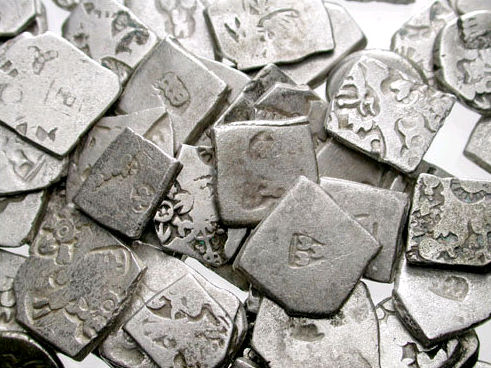
In one line: Punch-marked coins are the earliest coins of the Indian subcontinent, mostly of silver, with symbols punched onto metal pieces cut to a standard weight.
Features
They carry symbols such as the sun, animals, trees and hills, punched one at a time rather than struck with a single die. They are called karshapanas or panas in texts. They are usually dated from around the 6th century BCE, though some scholars place the first issues somewhat later, and they were issued by the Mahajanapadas of the Ganga plain and later by the Mauryas.
Why they matter
Coins show a money economy, long-distance trade and some state control over weights and measures, all signs of the second urbanisation.
Why it is in the news
Punch-marked coins are among the Rajghat artefacts now being documented by BHU.
Where to go next
Take the 7 September 2026 quiz: 30 Prelims-style questions with answers